Friday, August 13, 2010

Speaking of Courage

"On the lake side of the road, where real estate was most valuable, the house were handsome and set deep in, well kept and brightly painted, with docks jutting out into the lake, and boats moored and covered with canvas, and neat gardens, and sometimes even gardeners, and stone patios with barbecue spits and grills, and wooden shingles saying who lived where. On the other side of the road, to his left, the houses were also handsome, though less expensive and on smaller scale and with no docks or boats or gardeners" (pg 132).
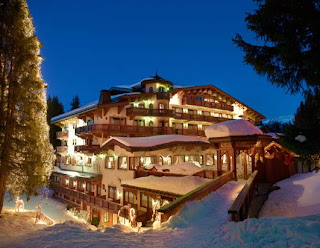


In chapter 15, we are able to see little bit of the local color of Norman Bowker's hometown. We hear about the landscape of the town. One road is divided in half with one half being upper class and the other half being more middle class. It's crazy how on literally the same road, things can be so different. I mean I guess it's not that different, but there are definitely noticeable distinctions between each side. It makes me wonder if the people got along on both sides, or if the people on the wealthier side thought they were better. It makes me curious. I have never witnessed a road like this. Although my pictures probably don't accurately depict the road at all, this is how I imagine it.

Ambush

"It was entirely automatic. I did not hate the young man; I did not see him as the enemy; I did not ponder issues of morality or politics or military duty" (pg 126).

Killing is part of the job description when it comes to being a soldier in a war. Everyone knows that. O'Brien's dialect makes it even more real. It's not that you hate the other person, it's just your duty as a soldier to kill the "enemy." I can't speak from experience, because obviously I don't have any, but it probably would become something like a reflex. There's no time to think; he must obey his obligation to our country. I don't think I could ever be a soldier for that reason. It takes great courage and self control to be a soldier, and I don't think I could handle it. That's why we love our soldiers!

Thursday, August 12, 2010

The Man I Killed


"You want to trade places with him? Turn it all upside down--you want that? I mean, be honest" (Pg 120).


Kiowa was just trying to make O'Brien feel better by saying this, but when it comes down to it, it's a really hard concept to think about. You're in a war and you kill a man. That's kind of what war's all about, right? Well I would be with O'Brien on this one. I would feel terrible killing another human being under almost any condition, even if I'm fighting in a war. Kiowa was trying to use rhetoric I believe. He wanted to persuade him that he did the right thing.Would you rather die fighting for your country or kill someone fighting for your country. Either way it sucks. Either you live knowing that you ended someone's life. (Who knows who that person was, what accomplishments they may achieve, or who their family is at home.) Or you die. Which one would you chose?

Church


"Though they were kind to all of us, they monks took a special liking for Henry Dobbins. 'Soldier Jesus,' they'd say, 'good soldier Jesus'" (pg 114).


I hate to say it, but even though it's wrong to pick favorites, everyone does it. Even MONKS! Reminds me of a teacher's pet. Although it was a very long time ago, I was indeed the teacher's pet in the first grade! Good times... Anyways, it's sad to say, but people even pick favorite's in families: favorite aunt, favorite cousin, favorite sister, favorite nephew, etc. So the monks choose Dobbins. This special treatment makes him consider joining a monostary. I don't know if this is the Catholic church, or if it has the same concept, but he is the same guy that wears his girlfriend's pantyhose around his neck. In the Catholic church, you have to take a vow of chastity. So these two sides are contradicting. I'm not sure if this makes sense, but it is somewhat juxtaposing. It shows his love for a woman in one chapter, then his consideration of becoming a monk and secluding himself from women.

Stockings

"In August, he tripped a Bouncing Betty, which failed to detonate. And a week later he got caught in the open during a fierce little firefight, no cover at all, but he just slipped the pantyhose over his nose and breathed deep and let the magic do its work. It turned us into a platoon of believers. You don't dispute facts" (pg 112).


As Michael Scott would say, "I'm not superstitious, but I am a little stitious." Therefore, I would become a believer too. You really can't fight facts. I think it would be awesome if Henry Dobbins' girlfriend's pantyhose did have magical powers. It goes against science and whatnot, but hey, if it works, it works. I have had good luck charms in my life, and I truly believe that they have helped me. The pantyhose are like a symbol of safety and comfort. They make him feel like he has a reason to live for. I bet every man in that platoon wishes he had a pair of his girlfriend's pantyhose to keep him safe in battle. Who wouldn't want that? (;


Sweetheart of the Song Tra Bong


"From the sixth grade on they had known for a fact that someday they would be married, and live in a fine gingerbread house near Lake Erie, and have three healthy yellow-haired children, and grow old together, and no doubt die in each other's arms and be buried in the same walnut casket" (pg 90).

What a great feeling that would be to feel like you have found your soulmate. This is "The Notebook" material, dying in each other's arms- how delightful! Sadly, everything has to come to an end. For Mark Fossie it ended awfully. At first, his princess gets off the helicopter and they spend every waking second together extending their fairy tale life. But eventually, she begins learning things; you can't be in the place of war and not change at all. Mary Anne changed for the worst. She got caught up in the war, and she wanted to be part of it. She found the Green Berets and she decided that was her calling. I feel bad for old Mark. He never thought that would happen when he brought his lady to the war.

The Dentist


"When Curt Lemon was killed, I found it hard to mourn" (pg 82).


I empathize with O'Brien here. I'm not a very emotional person, so I hardly ever cry. I'll think things are sad, but it takes A LOT for me to actually produce tears. I'll even want to cry to show that I am feeling something, but sometimes I just can't. At my best friend's cousin's funeral I only shed a few tears, even though it killed me to see her family going through this pain. Their house is literally my home away from home. I am there probably just as much as I am at my own house. I understand that O'Brien was not the fondest of Curt Lemon, but if a soldier in your brigade dies, it seems like you would feel really bad about it. He wanted to show remourse, but he just can't. I feel him there.